If you're planning monsoon weekend getaways from Delhi within 500 km, 2026 has ten destinations worth the drive: Mussoorie, Rishikesh, Lansdowne, Chakrata, Nainital, Haridwar, Alwar, Neemrana, Sariska, and Morni Hills. The hill stations disappear into fog for the only stretch of the year they do so. Rajasthan's forts and lakes look their sharpest against rain-soaked Aravalli hills. Choose a hill escape for cool air and mist, or choose Rajasthan for open roads and culture with just occasional showers.
| Best time to visit | Late July to mid-September 2026 |
| How to reach | Self-drive, cab, or train (NH-44, NH-58, NH-334, NH-48) |
| Nearest airport | Indira Gandhi International Airport (IGI), New Delhi |
| Nearest stations | New Delhi, Hazrat Nizamuddin, Old Delhi Junction |
| Ideal duration | 2 days/1 night to 3 days/2 nights |
| Budget range | ₹5,000–₹18,000 per person for a 2-day trip (mid-range) |
| Distance band | 100 km to 500 km from central Delhi |
A monsoon weekend getaway from Delhi usually comes down to one thing: you've got 48 hours, the city is grey and heavy, and you want either cool green hills or a change of scene without the brutal July heat. Every destination below stays within a comfortable drive radius and earns its spot because of exactly what the monsoon does to it.
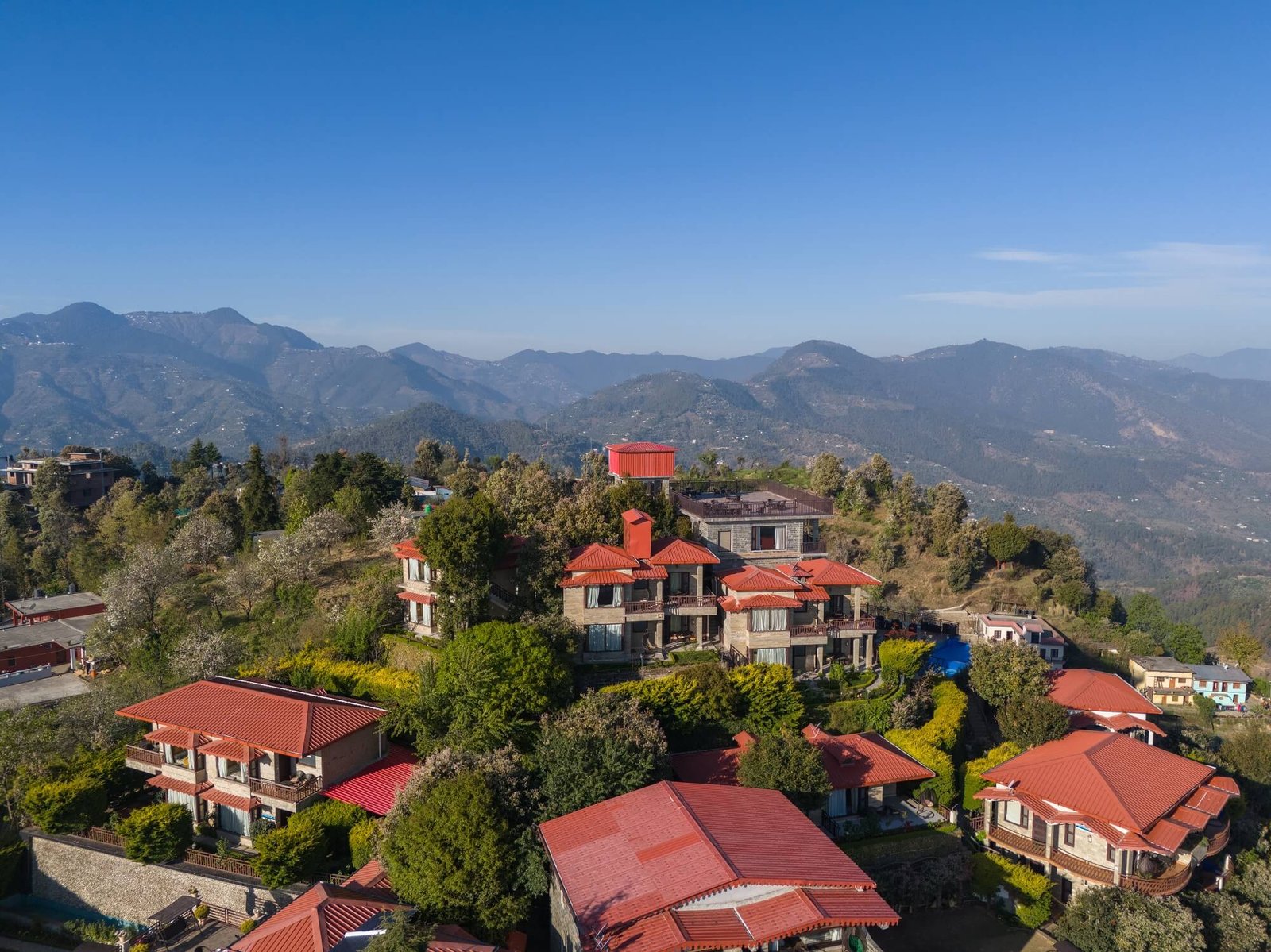
From July through September, Delhi's humidity peaks even as air quality quietly improves, the heat, though, doesn't let up. Drive a couple of hundred kilometres in any direction and the landscape changes entirely. The lower Himalayan belt around Mussoorie and Lansdowne stays wrapped in mist for weeks. The Aravallis near Alwar and Neemrana turn green for the only season of the year they do. Even Rajasthan, usually all dust and heat, feels like a different place once the clouds roll in. That's why many travellers start looking for the best monsoon weekend getaways from Delhi within 500km during this season.
The one thing to watch for: not every Himalayan route is monsoon-safe. Higher stretches of Uttarakhand beyond Mussoorie, toward Tehri or Badrinath, see regular landslides. That's why this list sticks to destinations reachable on solid, well-maintained highways with dependable monsoon conditions and stays that run year-round.
The ten picks below are grouped by what the rain actually does to them. Four are Uttarakhand hill stations where the monsoon itself is the draw. Two are river towns where a swollen Ganga becomes the main event. Three are Rajasthan heritage and nature stops where the roads stay excellent and the rain is only occasional. And one is Haryana's own hill station, close enough that it needs almost no planning at all.
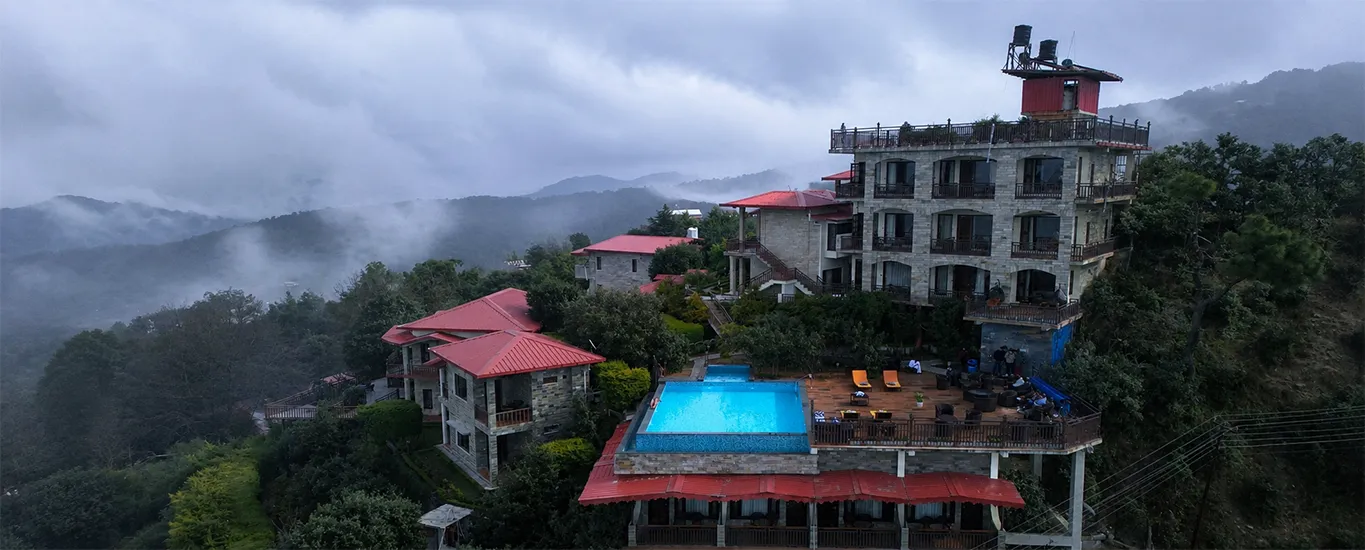
Mussoorie sits at 2,005 metres in the Garhwal Himalayas, about 290 km from central Delhi on NH-58 via Dehradun. It's India's most recognisable hill station, and in July–August it turns genuinely cinematic, mist rolls up from the Doon Valley by mid-morning, Kempty Falls runs at full strength, and the usually packed Mall Road becomes quiet enough to actually stroll.
Why visit Mussoorie in monsoon: The Benog Wildlife Sanctuary trail goes a deep, saturated green. Camel's Back Road at dawn, fog pooling in the valley beneath, is one of the finest monsoon views in North India. Gun Hill vanishes into cloud within minutes of the ropeway ride up, weather theatre no other season can offer.
How to reach Mussoorie from Delhi
Places to Visit & Things to Do
Must-see: Kempty Falls; Camel's Back Road; Gun Hill (via ropeway); Lal Tibba; Mussoorie Lake; George Everest Estate; Landour Bazaar; Benog Wildlife Sanctuary.
Things to do: Walk along Mall Road in the rain; ride the Gun Hill ropeway; trek the Benog Ridge trail; explore Landour Bazaar; enjoy local momos and mountain views.
Book Your Luxury StayRishikesh sits where the Ganga leaves the Garhwal Himalayas for the plains, about 240 km from Delhi via NH-334 and Haridwar, a 4.5 to 5 hour drive. In monsoon, the town's usual adventure-sport identity takes a backseat (white-water rafting pauses from late June through August), replaced by a quieter, more reflective version of itself, ashrams fill with long-stay guests, Tapovan's riverside cafes empty out, and the Ganga runs at a force that's hard to look away from.
Why visit Rishikesh in monsoon: The Shivalik foothills around town go deep green. The evening Ganga Aarti at Triveni Ghat, with a flood-stage river roaring past, is unlike the calmer winter version. Parmarth Niketan's aarti, held on steps that nearly meet the rushing water, is genuinely moving.
How to reach Rishikesh from Delhi
Places to Visit & Things to Do
Must-see: Lakshman Jhula; Ram Jhula; Triveni Ghat; Parmarth Niketan; Beatles Ashram (Chaurasi Kutia); Neelkanth Mahadev Temple.
Things to do: Attend the Ganga Aarti; join a yoga session; explore Beatles Ashram; relax at riverside cafés in Tapovan; enjoy a walk along the Ganga.
Book Your Luxury StayLansdowne is a Garhwal Rifles cantonment town at 1,700 metres in Pauri Garhwal, about 260 km from Delhi via Najibabad and Kotdwar, roughly a 5-hour drive. Its military-town status is exactly why it's stayed a no-honking, no-construction hill station. There's no nightlife, no shopping strip, barely any phone signal, and in monsoon, that's precisely the point. The oak and pine forest around it turns intensely green, mist settles in the valley through the afternoon, and Bhulla Tal fills to its highest level of the year.
Why visit Lansdowne in monsoon: The access road through Kotdwar is one of the safer Himalayan-edge routes, wide, well-graded, with only short landslide-prone patches. You get genuine Himalayan greenery without the crowds that Mussoorie or Nainital pull in.
How to reach Lansdowne from Delhi
Places to Visit & Things to Do
Must-see: Bhulla Tal; Tip-in-Top Viewpoint; St. Mary's Church; Garhwali Mess Museum; Tarkeshwar Mahadev Temple.
Things to do: Go boating at Bhulla Tal; walk through the peaceful cantonment; visit Tip-in-Top for mountain views; take a half-day trip to Tarkeshwar Mahadev.
Book Your Luxury StayChakrata is a small cantonment town at 2,118 metres in Dehradun district, about 320 km from Delhi on NH-707 beyond Vikasnagar, at the outer edge of comfortable weekend range but consistently worth the extra hour. It's a restricted zone (an inner permit is needed from the local tehsil office or the Uttarakhand eDistrict portal), which has kept it from turning into another crowded hill station. Tiger Falls, one of India's tallest direct waterfalls at around 312 feet, hits its peak flow in August and September and is genuinely spectacular after heavy rain.
Why visit Chakrata in monsoon: This is the season Tiger Falls actually justifies the 4 km downhill trail, the cascade runs thunderous and the surrounding forest sits entirely in cloud. Deoban, 30 km from town, gives birdwatchers a shot at Himalayan pheasants, minivets, and trogons in a conifer forest that's almost entirely tourist-free.
How to reach Chakrata from Delhi
Places to Visit & Things to Do
Must-see: Tiger Falls; Chilmiri Neck Viewpoint; Deoban Forest; Koti Kanasar Meadows; Mundali.
Things to do: Trek to Tiger Falls; go birdwatching in Deoban; enjoy a walk through Koti Kanasar; soak in the valley views from Chilmiri Neck.
Book Your Luxury StayNainital, the most popular Kumaon hill station, sits at 2,084 metres roughly 300 km from Delhi via NH-9 through Moradabad and Haldwani. Naini Lake turns a deep, opaque jade in monsoon, and the ridges around it, Snow View, Tiffin Top, Dorothy's Seat, sit inside a near-permanent cloud bank. Boat rides continue even in light rain, and the saddle between the peaks is often clear by dawn.
Why visit Nainital in monsoon: The season genuinely improves the town. The lake hits its highest water level, the peak-summer crowds (April–June) have thinned out, and the oak and rhododendron cover on the ridges is at its thickest. Landslide risk is real but manageable, stick to the main Haldwani–Nainital road and check state PWD alerts before setting off.
How to reach Nainital from Delhi
Places to Visit & Things to Do
Must-see: Naini Lake; Snow View Point; Tiffin Top; Naina Devi Temple; Eco Cave Gardens; High Altitude Zoo.
Things to do: Enjoy a boat ride on Naini Lake; take the Snow View ropeway; hike to Tiffin Top; shop on Mall Road; visit the peaceful Bhimtal Lake.
Book Your Luxury StayHaridwar, one of Hinduism's seven sacred cities, sits on the right bank of the Ganga where the river first reaches the plains, 225 km from Delhi on NH-334 via Meerut and Roorkee. In monsoon the river runs high, fast, and grey-green at Har Ki Pauri, and the evening Ganga Aarti becomes a dramatically different experience from its winter self, wider river, louder rush, more overwhelming to watch. If you're travelling with elderly parents or kids who can't handle hill roads, Haridwar is the most accessible spiritual escape on this list.
How to reach Haridwar from Delhi
Places to Visit & Things to Do
Must-see: Har Ki Pauri; Mansa Devi Temple; Chandi Devi Temple; Bharat Mata Mandir; Daksha Mahadev Temple.
Things to do: Attend the Ganga Aarti at Har Ki Pauri; take the Mansa Devi ropeway; enjoy a walk along the Ganga; visit Patanjali Yogpeeth.
Book Your Luxury StayAlwar sits 170 km from Delhi in north-eastern Rajasthan and is one of the more underrated monsoon escapes from the capital. The 3-hour drive on NH-248A cuts through the Aravallis at their greenest in late August. The town centres on Bala Quila hill fort, a working City Palace museum, and Siliserh Lake, a 19th-century hunting palace built into a hillside above an artificial lake that fills dramatically once the rains arrive.
Why visit Alwar in monsoon: This is the only time of year the Aravallis around Alwar turn genuinely lush. Siliserh Lake boating runs weather-permitting, and the City Palace's carved chhatris photograph beautifully against monsoon cloud cover. Alwar also works as a natural gateway to Sariska Tiger Reserve, combine the two for a longer weekend.
How to reach Alwar from Delhi
Places to Visit & Things to Do
Must-see: Bala Quila (Alwar Fort); City Palace & Government Museum; Siliserh Lake; Moosi Maharani Ki Chhatri; Sagar Lake.
Things to do: Visit Bala Quila for panoramic views; enjoy boating at Siliserh Lake; explore the City Palace Museum; try Alwar's famous Kalakand.
Book Your Luxury StayNeemrana is a small Aravalli town in Alwar district, just 120 km southwest of Delhi on NH-48 (the Delhi–Jaipur Expressway), a 2-hour drive that makes it the easiest entry on this list and the most practical for a single overnight. It's best known for the 15th-century Neemrana Fort Palace, India's earliest heritage hotel, layered across 12 levels of hillside, and for the Neemrana Baori, a 9-storey stepwell that fills partially with rainwater in monsoon and looks genuinely cinematic when lit in the afternoon.
Why visit Neemrana in monsoon: The surrounding scrub and rock turn an unexpected green. Fort gardens and rooftop restaurants frame rain-washed Aravalli ridges, and crowds run far lower than in winter, better room availability, quieter heritage walks.
How to reach Neemrana from Delhi
Places to Visit & Things to Do
Must-see: Neemrana Fort Palace; Neemrana Baori; Sariska Palace; Flying Fox Zipline.
Things to do: Explore the fort terraces; go ziplining over the Aravallis; visit the historic Baori; enjoy a cultural dinner at the fort.
Book Your Luxury StaySariska Tiger Reserve is an 881 sq km dry deciduous forest in Alwar district, 200 km from Delhi via NH-248A. It does hold a Bengal tiger population, but the core safari zone closes from 1 July to 30 September. The monsoon draw here is the buffer zone drives, the Pandupol Hanuman temple inside the reserve (accessible year-round), and nearby Bhangarh Fort, whose Aravalli valley setting is at its most striking after heavy rain. This one's for travellers who enjoy forests for their own sake, not just for wildlife spotting.
How to reach Sariska from Delhi
Places to Visit & Things to Do
Must-see: Pandupol Hanuman Temple; Bhangarh Fort; Naldeshwar Temple; Siliserh Lake.
Things to do: Drive through the wildlife buffer zone; visit Pandupol Temple; explore Bhangarh Fort; relax by Siliserh Lake.
Book Your Luxury StayMorni Hills is Haryana's only hill station, set in the Shivalik foothills near Panchkula at roughly 1,220 metres, 270 km from Delhi on NH-44, about a 4.5-hour drive. The twin lakes of Tikkar Taal (Big and Small) are the main draw, ringed by oak and pine and connected by a short forest walk. Because Morni isn't a "name" hill station, you'll often have its viewpoints entirely to yourself, a rarity for any Delhi-region weekend trip.
Why visit Morni in monsoon: The whole Shivalik belt turns jungle-dense, Tikkar Taal fills to its highest level, and the air runs 6–8 degrees cooler than Delhi. It's also the strongest pick if you want hills but can't justify a 5–6 hour drive to Himachal.
How to reach Morni Hills from Delhi
Places to Visit & Things to Do
Must-see: Tikkar Taal; Morni Fort; Adhi Devi Temple; Berwala Viewpoint; Khol Hi-Raitan Wildlife Sanctuary.
Things to do: Enjoy boating at Tikkar Taal; walk the forest trail; visit Morni Fort; watch the sunset from Berwala Viewpoint.
Book Your Luxury StayFind Your Match in 30 Seconds
Leave Friday night or before 6 AM Saturday.
Delhi's exit traffic on NH-48 and NH-334 builds sharply after 7 AM, an early start saves 60–90 minutes each way.
Check the IMD nowcast before departure.
The India Met Department's 6-hour regional bulletin is surprisingly accurate, reschedule if your destination zone is under an orange or red alert.
Carry physical cash.
Small Himalayan and Aravalli towns lose UPI signal in heavy rain; ₹3,000–₹5,000 in hand covers most monsoon contingencies.
Do the self-drive monsoon checks.
Wipers, tyre tread, brake response, and headlamp alignment matter more on wet ghat roads than on summer highways.
Avoid Kanwar Yatra weeks.
Usually mid-July to early August, routes through Meerut, Muzaffarnagar, and Haridwar see partial vehicle restrictions, Rajasthan destinations are unaffected.
Save maps offline for your destination.
Ask your Ojaswi Resort host for the locally recommended monsoon route, especially before any ghat section.
Pack a dry bag for documents and electronics.
One Ziploc-lined section in your duffel is enough, saves a frantic search after an unexpected downpour.
Plan your return for daylight.
Aim to be back in Delhi before 8 PM, visibility drops fast on wet highways after sunset, and Sunday return traffic peaks between 6 and 9 PM.
The best monsoon weekend getaways from Delhi aren't the ones with the most social media traction, they're the ones that match a mood and stay safely reachable while it's actively raining. Of the ten destinations above, three stand out for first-time monsoon travellers: Neemrana for the easiest heritage overnight, Mussoorie for the most cinematic hill experience, and Rishikesh for a quiet spiritual slow-down that the off-season genuinely makes possible.
Pick by mood, book your Ojaswi Resort stay early, monsoon weekends sell out faster than most travellers expect, and treat the per-destination notes above as a starting point, not a fixed script. The rain will do the rest.